The complete guide
What wooden decorative sound-absorbing panel actually does once COSTWAY's panels are on the wall
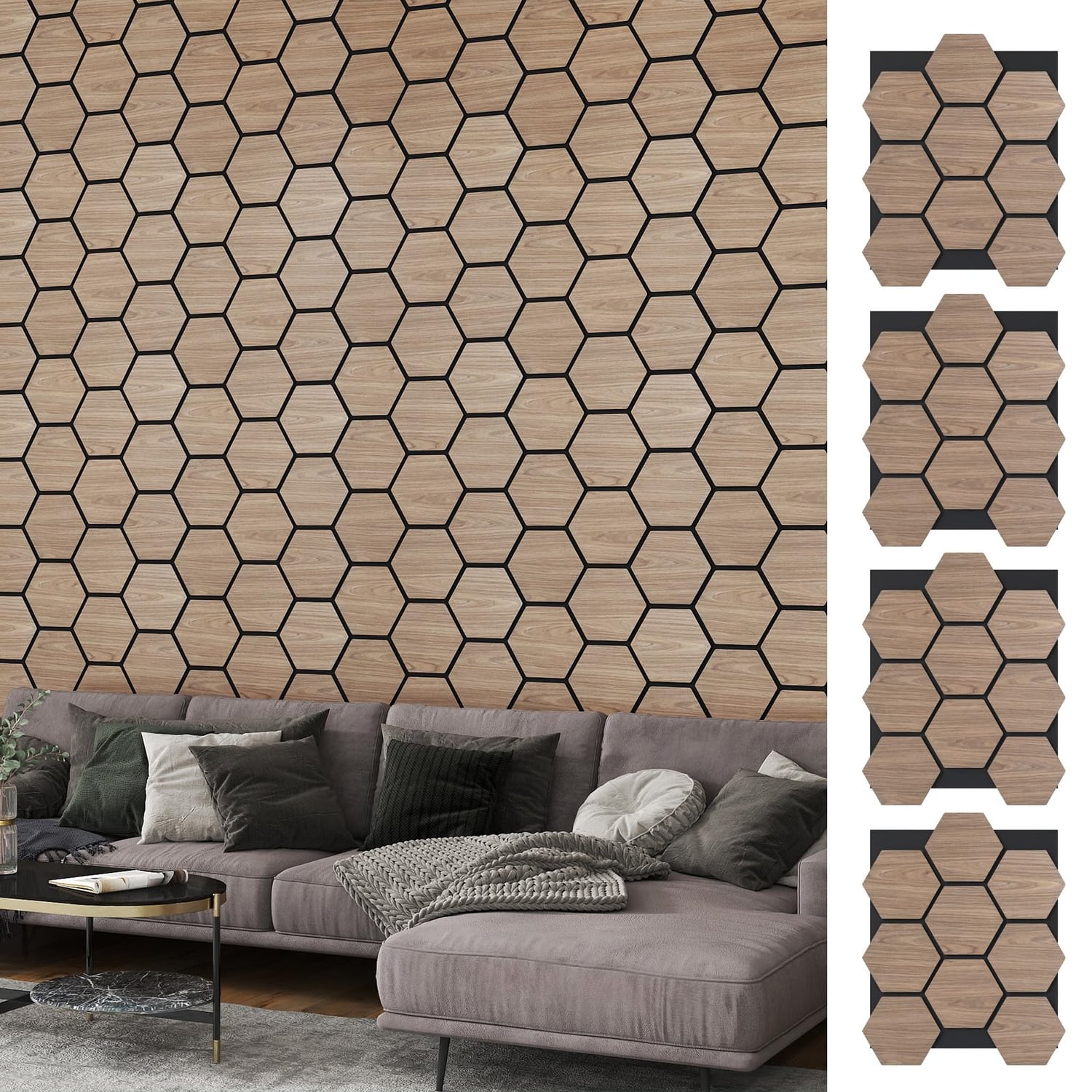
Hexagon tiles tessellate cleanly, which makes planning the layout the one step worth doing before the adhesive backing comes off.
Start from the centre, not a corner
Mark the centre of the area you're covering and dry-fit the first hexagon there before peeling any backing. Working outward from a centred tile keeps the pattern symmetrical even if the wall itself isn't a perfect rectangle — the trimmed, half-tiles end up at the edges where they're least noticeable, rather than in the middle of the wall.
What wooden decorative sound-absorbing panel is doing acoustically
A genuine wood-panel construction from an established furniture/homeware brand. In practice that means voices and hard reflective slap off a bare wall soften noticeably once a cluster of panels goes up — most people notice the difference within the first few tiles, well before the whole 4-piece set (81 x 66 x 1.8cm (9 hexagon board)) is covered.
Getting real coverage from a 4-pack
A single pack rarely treats an entire wall on its own. Use it to cover the reflection points that matter most — directly opposite a microphone, speaker or the loudest hard surface in the room — before spreading tiles thinly across the whole wall for a cosmetic look that does less acoustic work.